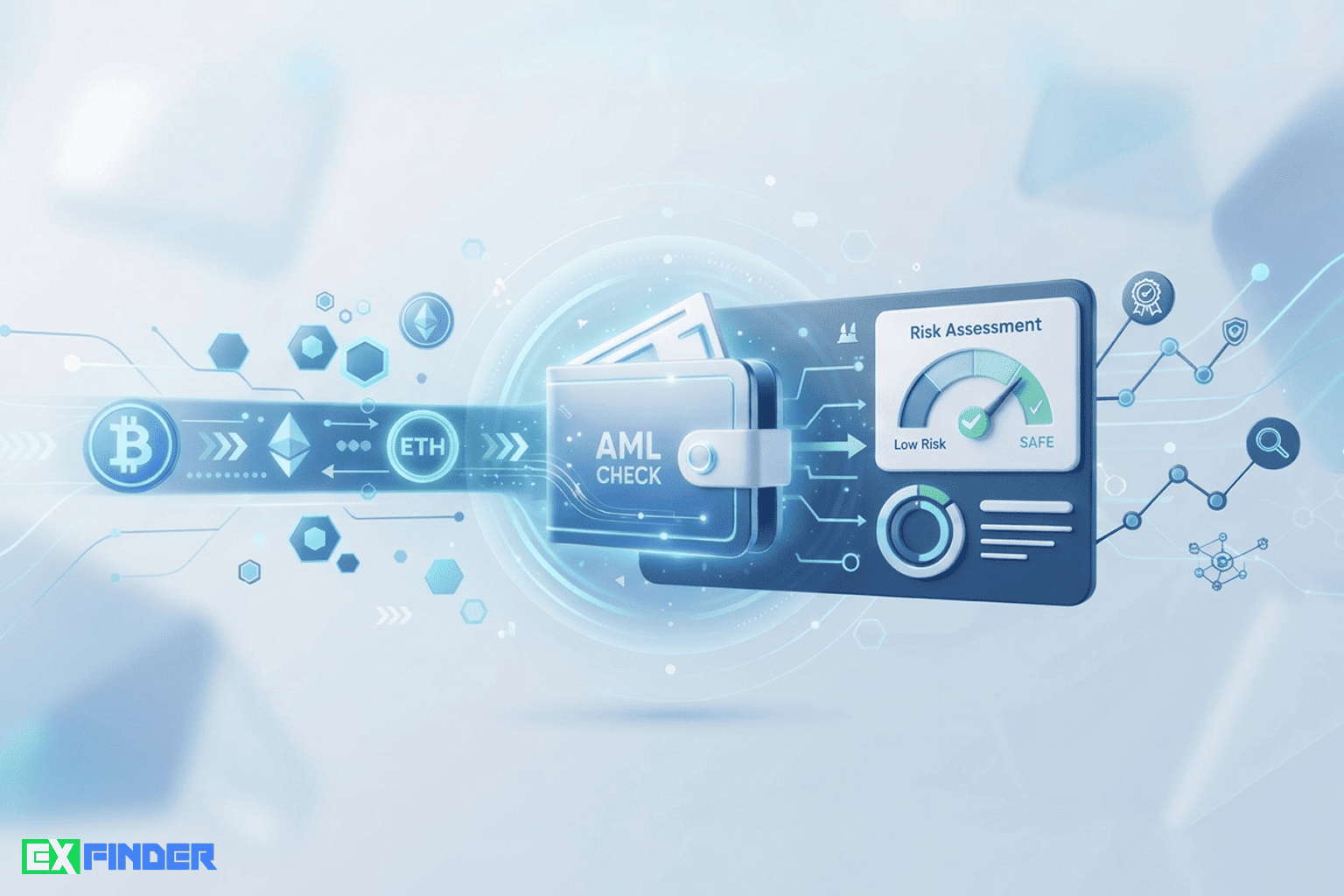
An AML check analyzes the transaction history of cryptocurrency funds on the blockchain to identify links to sanctioned addresses, mixers, darknet markets, or exploited protocols. Even legally purchased coins can receive a high AML Risk Score due to earlier transfers. To prevent asset freezes during an exchange or withdrawal, check both your wallet and individual transactions ahead of time and convert funds through vetted services listed on our crypto exchange monitoring platform, which supports transparent AML standards for both users and partner exchangers.
1. Introduction: Why Wallet AML Checks Became Essential in 2026
Cryptocurrencies have long moved beyond early experiments and become an integral part of global finance. Alongside stricter regulation, requirements around verifying the origin of funds have tightened significantly.
In 2026, centralized exchanges, payment gateways, and online exchangers routinely scan incoming transfers. If automated screening detects a suspicious transaction trail, a transfer may be paused pending review.
Many users only learn about AML checks when their transfer is flagged for additional verification or frozen. In most cases, the holder has not committed any wrongdoing themselves.
Risky or tainted cryptocurrency often reaches everyday holders through P2P trades, unverified exchange websites, questionable yield pools, or casual transfers from third-party addresses.
Understanding how AML screening works helps you evaluate exposure before sending coins. That clarity saves time, reduces stress, and protects your balance from prolonged compliance holds.
Our crypto exchange monitoring directory helps users compare vetted services with clear operating rules while enabling exchange operators to build transparent trust with clients and the broader market.
2. How AML Checks Work and What Coin "Cleanliness" Means
The acronym AML stands for Anti-Money Laundering. In the crypto space, AML screening evaluates the transaction graph across public blockchains to trace where funds have traveled.
2.1. Why Coins Carry On-Chain History
Major networks such as Bitcoin, Ethereum, and Tron record transaction histories openly on-chain. Every new transfer appends another hop to the movement path of those funds.
When you receive USDT, BTC, or another asset, risk models look beyond just the immediate sender. They also trace upstream wallets that sent funds to the sender's address.
The result is an overall risk rating, typically expressed as a percentage or score from 0 to 100. Lower scores indicate fewer connections to high-risk entity categories.
2.2. Direct vs. Indirect Links to Risky Sources
Analytics tools distinguish between direct and indirect exposure. A direct link means funds arrived straight from a flagged address or moved to it with no intermediate hops.
An indirect link occurs when one or more intermediate transfers sit between a risky source and your wallet. Scoring models weigh hop distance as well as the proportion of volume tied to flagged activity.
Because of this, even a modest inflow from a sensitive source can raise the risk score of a specific transfer. Evaluating individual transactions matters just as much as checking the overall wallet.
2.3. Source Categories That Increase AML Risk
Blockchain intelligence databases are continuously updated using security incident investigations and regulatory watchlists. Common high-sensitivity markers include:
- Sanctioned addresses and entities: Wallets listed on regulatory sanction lists, where even minimal exposure typically triggers strict compliance action.
- Protocol hacks and exploits: Funds drained from compromised bridges, DeFi protocols, or breached platforms.
- Mixers and anonymization services: Tools designed to obscure transfer trails between senders and recipients, often drawing heightened scrutiny.
- Darknet markets and scam schemes: Addresses tied to phishing, fraudulent investment sites, and illicit operations.
- High-risk gambling or restricted categories: Depending on a platform's internal risk appetite, certain additional categories can also elevate risk scores.
2.4. How Aggregate Risk Scores Are Calculated and Why Depth Matters
Modern analytics systems evaluate more than the mere presence of a link to a flagged address; they measure how closely and directly that connection relates to specific funds. When coins pass through multiple intermediate wallets or merge with other deposits, algorithms estimate the likelihood that the funds originated from a given source.
Different analytics providers may also classify certain activity categories differently. What one tool labels as moderate risk might prompt another platform to request additional verification or apply stricter controls.
When reviewing a report, look beyond the headline percentage and inspect the category breakdown. Seeing the details helps clarify whether exposure comes from a multi-hop indirect link or a direct interaction with a restricted address.
3. AML Risk Score Levels and How to Interpret Them
Different platforms set their own risk thresholds and compliance policies, yet the general interpretation framework is broadly similar. Use the table below as a practical reference for AML Risk Score tiers:
| Risk Tier | Typical Range | What the Score Usually Indicates | Common Platform Response and User Step |
|---|---|---|---|
| Low Risk | 0% – 25% | Mostly clean history, links to established venues, or neutral transfers. | Standard processing without extra checks on most platforms. |
| Medium Risk | 26% – 50% | Moderate indirect exposure or contact with categories sensitive to certain services. | Possible selective review; check service rules before initiating a transfer. |
| High Risk | 51% – 75% | Noticeable direct or close indirect links to risky addresses or mixers. | Frequently causes transfer delays, requests for explanations, or service refusal. |
| Severe / Critical Risk | 76% – 100% | Direct links to sanctioned wallets, stolen funds, or known scam addresses. | High likelihood of fund holds, compliance freezes, or strict rejection. |
4. How to Check Wallet and Transaction Cleanliness on Your Own
Routine self-checks help spot issues early and prevent risky funds from reaching wallets used for active trading or conversions.
4.1. Check Specific Transfers, Not Just the Whole Wallet
Many users check only their main address balance and overlook a specific incoming transfer. Even a wallet with a solid history can receive a single risky incoming transaction.
Before sending coins to an exchange or trading venue, evaluate the exact funds you plan to move. Doing so prevents clean balances from being mixed with problematic inflows.
4.2. Pay Extra Attention to P2P and Cash Deals
Buying crypto for cash or through private P2P listings carries higher source uncertainty than using established venues. You rarely have visibility into how a counterparty sourced their liquidity.
If you plan to convert received coins later, consider receiving them into a separate intermediate wallet first. Once checked, you can decide whether to route them onward.
4.3. Separate Wallets by Purpose
Separating addresses by activity reduces operational risk. Many holders keep distinct wallets for long-term storage, DeFi experimentation, and routine conversions.
When interacting with new protocols, airdrops, or unfamiliar contracts, use a dedicated address. That way, your primary reserve is not exposed unnecessarily.
4.4. What to Do Before Sending Coins to an Exchange or Exchanger
Before sending funds to an exchange or conversion service, check the address or specific transaction you intend to use. This step is especially helpful after receiving payments from third parties, settling invoices, or withdrawing from external services.
If you manage multiple assets or networks, verify the exact address and token involved in the transaction. Checking early gives you time to spot unwanted exposure and choose a safer path.
5. What to Do If a Transaction or Exchange Is Blocked for AML
Having a transfer paused for AML review is stressful, but panicking or sending repeated transfers only complicates matters. Follow a structured sequence to handle the situation cleanly.
- Record transaction details: Save the transaction hash (TXID), sender and receiver addresses, amount, network, and timestamp.
- Ask support for the specific reason: Contact the support team of the platform holding the transfer and clarify which risk flag triggered the review.
- Avoid duplicate orders or extra transfers: Sending more funds to the same address before receiving guidance can confuse tracking and prolong resolution.
- Prepare proof of source of funds: When requested, provide clear records or statements showing where and how you acquired or received the cryptocurrency.
- Follow the platform's review timeline: Compliance reviews can take anywhere from a few hours to several days depending on transaction graph complexity and queue volume.
⚠️ What Not to Do During an AML Hold:
- Never submit forged or altered documents: Falsified records typically result in permanent rejection and internal blacklisting.
- Do not trust "social media recovery agents" offering instant unlocks for a fee: Only the entity conducting the compliance review can evaluate and resolve a held transfer.
- Never share private keys or seed phrases: No legitimate exchange, compliance team, or monitoring directory will ever ask for your secret recovery phrase or private keys.
5.2. Documents and Explanations Commonly Requested During Compliance Review
When a transaction is placed under additional review, compliance teams often ask for an explanation of the source of funds or context around the transfer. Exchange statements, trade histories, or purchase receipts showing how you obtained the assets are commonly helpful.
In some cases, transaction confirmations, invoices, or a clear summary of the activity behind the transfer may also be requested. Clear, accurate, and consistent documentation helps reviewers assess the case within their procedures.
6. How Crypto Exchange Monitoring Helps Prevent Issues and Support Reliable Operations
Where you convert cryptocurrency directly affects how predictable the process feels. Our crypto exchange monitoring platform organizes information on vetted services so users can compare terms and make informed choices.
We pay close attention to service reputation, rate accuracy, reserve stability, and security practices. That focus benefits both everyday users and operators running exchange services.
💡 Benefits of Exchange Monitoring for Crypto Users:
- Transparent comparison of exchangers: Compare rates, available reserves, and user reviews to pick a suitable service for your currency pair.
- Clearer expectations before ordering: Review service terms and transaction guidelines ahead of time rather than encountering surprises mid-process.
- Safer navigation away from spoofed sites: Using verified links from a structured directory lowers the chance of landing on a lookalike phishing domain.
- Support and dispute visibility: In case of delays or misunderstandings, users have clear communication channels and documented order details.
🤝 Benefits of Partnering with Exchange Monitoring for Exchanger Owners:
- Access to targeted exchange demand: Reach users actively comparing rates and looking for dependable conversion services.
- Stronger market credibility: Being listed in a curated directory reinforces brand visibility and signals commitment to reliable service standards.
- Practical technical integration: Automated rate feeds and analytics help teams track performance, manage reserves, and respond quickly to market shifts.
- Ongoing partner communication: Working with a monitoring team helps keep listing data accurate, address user inquiries smoothly, and grow sustainably.
7. Comparing Exchange Channels: Risky Shortcuts vs. Vetted Directory Services
To see the practical difference between ad-hoc transactions and using a curated directory, compare the key criteria in Table 2 below:
| Evaluation Criterion | Ad-Hoc P2P & Unverified Sites | Services Listed in Our Monitoring |
|---|---|---|
| AML Risk Controls | Often inconsistent or absent; higher chance of receiving risky funds. | Structured security expectations and clearer transaction review rules. |
| Transparency of Terms | Higher risk of sudden rate shifts or hidden fees during execution. | Clearer visibility into rates, reserves, and order terms before confirming. |
| Link & Domain Safety | Greater phishing exposure when clicking ads or unverified chat links. | Direct routing to vetted official partner domains. |
| Handling Edge Cases | Higher risk of unresponsive counterparties if delays occur. | Established support channels and structured escalation options. |
| Business Growth Potential | Harder to scale user trust independently from scratch. | Targeted traffic, stronger brand trust, and partner ecosystem support. |
8. Everyday Habits for Preventing AML Headaches
Most compliance friction can be reduced before a transfer ever leaves your wallet. Build these practical habits into your routine:
- Screen large or third-party inflows early: Check the history of funds before sending them to an exchange or trading account.
- Keep clean records of your activity: Save dates, amounts, hashes, and source details in case a platform asks about the origin of funds.
- Avoid shortcuts or workarounds: Trying to bypass standard checks often creates tougher restrictions later.
- Choose exchange partners deliberately: Compare terms calmly on the monitoring directory instead of rushing during volatile price swings.
9. Frequently Asked Questions
Can an apparently "clean" wallet get a high AML risk score after a single transfer?
Yes. Risk scoring depends on the specific funds received. Even if a wallet previously had low exposure, receiving coins from a high-risk source can raise the risk rating of that transfer or portion of funds.
How long does an AML review of a blocked transaction usually take?
Timelines vary depending on the platform's compliance rules, transfer size, and transaction graph depth. Some reviews finish within a few hours after submitting details, while more complex cases can take several days.
Does using an exchange monitoring site guarantee a transfer will never be paused for review?
No monitoring directory or service can override legal requirements or a platform's internal risk controls. However, using vetted services with clear rules and checking coin history beforehand significantly reduces unexpected issues.
How can a crypto exchange owner apply to join the monitoring directory?
Applicants generally need solid operational reliability, healthy reserves, accurate rate feeds, and responsive customer support. You can review partnership requirements and submit an inquiry through our partner section.
Is the exchange monitoring directory free for users?
Yes, users can compare rates, reserves, and exchange options for free before navigating to a selected partner's website to complete an order.
10. Conclusion: A Thoughtful Approach to Crypto Safety and Exchange
AML checks have become a standard part of operating in the cryptocurrency market in 2026. Knowing how risk scores are formed and how to respond if a transfer is delayed helps you stay in control and avoid avoidable losses.
Pair basic wallet and transfer checks with reliable conversion venues. Our crypto exchange monitoring platform helps users find vetted services for smooth conversions while supporting exchange operators who value transparent, trustworthy operations.