Peer-to-Peer (P2P) trading on centralized cryptocurrency exchanges is no longer a safe method for converting assets. Every day, users face severe risks of bank account freezes under Anti-Money Laundering (AML) enforcement, "Triangle" fraud schemes, payment chargebacks, and receiving "tainted" cryptocurrency. To fully secure your savings, use our specialized crypto exchange monitoring platform: we aggregate exclusively verified exchange providers with transparent reserves, official payment gateways, and round-the-clock support.
1. Introduction: Why the Popularity of P2P Exchange Created High-Risk Vectors for Capital
The rapid expansion of the cryptocurrency market has enabled direct financial transactions between private individuals. For a long time, Peer-to-Peer (P2P) trading on centralized exchanges was touted as the simplest method to cash out digital assets into fiat currency. Traders were drawn by the absence of traditional banking intermediaries, high execution speeds, and perceived anonymity. However, in recent years, the landscape has fundamentally shifted. The P2P segment has turned into a major battleground dominated by cybercriminals, financial scammers, and illicit money-muling networks.
Executing P2P transactions today carries enormous legal and financial risks. The core danger stems from trading directly with an unverified third party. You have zero visibility into the origin of their funds, the history of their bank account, or their underlying intentions. As a result, an ordinary trader attempting to exchange legitimately earned USDT or Bitcoin risks losing every dollar in their bank account, getting blacklisted across the financial system, or facing criminal charges for facilitating money laundering.
Recognizing these challenges, we built our intelligent crypto exchange monitoring platform. Our service is designed to guarantee complete safety during cryptocurrency buy and sell transactions. We curate a vetted catalog of exchange providers operating with legal transparency, supporting official merchant payment gateways, and undergoing continuous multi-stage security audits before joining our platform.
2. Banking Financial Monitoring and AML Risks in P2P Transactions
Many P2P users operate under the false assumption that passing Identity Verification (KYC) on an exchange guarantees a safe deal. This is a dangerous misconception. Exchange KYC merely confirms the account holder's identity; it provides zero control over the origin of fiat funds entering your personal bank card. The banking system and financial regulators operate entirely independently of crypto exchanges, applying strict, automated Anti-Money Laundering and Counter-Terrorist Financing (AML/CFT) detection algorithms.
2.1. How Bank Algorithms Flag P2P Transfers
Modern bank fraud detection engines evaluate account activity in real time. Key flags that trigger immediate automated card freezes include:
- Abnormal Transaction Frequency: Receiving or sending transfers to dozens of different private individuals within a single 24-hour period.
- Rapid Fund Transit: Receiving funds on a card and immediately withdrawing or transferring them out within minutes.
- Income Discrepancies: Processing cumulative transaction volumes that vastly exceed the declared monthly income of the account holder.
- Links to Compromised Accounts: Accepting incoming payments from accounts previously tied to phishing investigations, illegal gambling, or unauthorized shadow exchange networks.
2.2. Consequences of Account Lockouts Under Financial Monitoring Laws
When your bank card gets flagged under financial monitoring protocols following a P2P trade, the bank restricts access immediately and demands formal proof of fund origins. Because private P2P transactions lack official sales contracts or tax invoices, providing acceptable documentation is virtually impossible. In the best-case scenario, the bank unilaterally terminates its relationship with you and issues cash through a branch teller; in the worst-case scenario, your name is entered into a national interbank risk registry, preventing you from opening bank accounts anywhere else in the country.
3. Detailed Fraud Scheme Breakdown: Table 1
To avoid losing your savings during P2P transactions, you must thoroughly understand the mechanics used by attackers. The table below outlines the most prevalent scam vectors active across P2P platforms:
| Scam Scheme Name | Attacker Mechanics | Impact on the User | Why Exchange Escrow Fails to Protect |
|---|---|---|---|
| "Triangle" Scheme (Man-in-the-Middle) | The scammer sells a non-existent item on a classifieds site and opens a P2P buy order with you. The item buyer transfers money to your card. You release crypto to the scammer. | Total loss of crypto, frozen bank accounts, criminal proceedings filed against you by the scammed item buyer. | The exchange verifies that fiat arrived on your card and forces you to release the locked crypto per platform rules. |
| Third-Party Payment Transfer | Fiat funds arrive from a third party's card (name does not match the exchange KYC). The victim owner reports account compromise to the bank. | Forced bank clawback of the transaction, frozen bank accounts, police investigations for stolen fund reception. | Escrow checks only blockchain lock, while the bank reverses the fiat transfer as an unauthorized transfer. |
| Chargeback (Payment Reversal) | The buyer pays via a payment service with buyer protection rights (Revolut, PayPal, foreign credit cards) and requests a chargeback after obtaining the crypto. | The fiat payment is revoked by the processor. You are left with neither fiat nor cryptocurrency. | Payment processors do not accept P2P exchange chat logs as proof of digital service delivery. |
| "Dirty" Cryptocurrency (AML High-Risk) | You receive USDT or BTC that originated from darknet marketplaces, ransomware attacks, or exploited DeFi protocols. | Permanent freeze of your personal crypto wallet or exchange account with zero withdrawal permissions. | The exchange allows the P2P transfer, but automated blockchain analytics mark your wallet downstream. |
| Fake Receipts & Social Engineering | The scammer uploads a fabricated payment receipt or sends spoofed bank SMS notifications, pressuring you to confirm before funds hit your balance. | Complete loss of digital assets due to haste or intimidation tactics under pressure. | If you manually click "Confirm Payment Received", exchange arbitration will reject your appeal. |
4. In-Depth Analysis of the Most Dangerous P2P Scam Vectors
4.1. The "Triangle" Trap: How You Become a Criminal Suspect
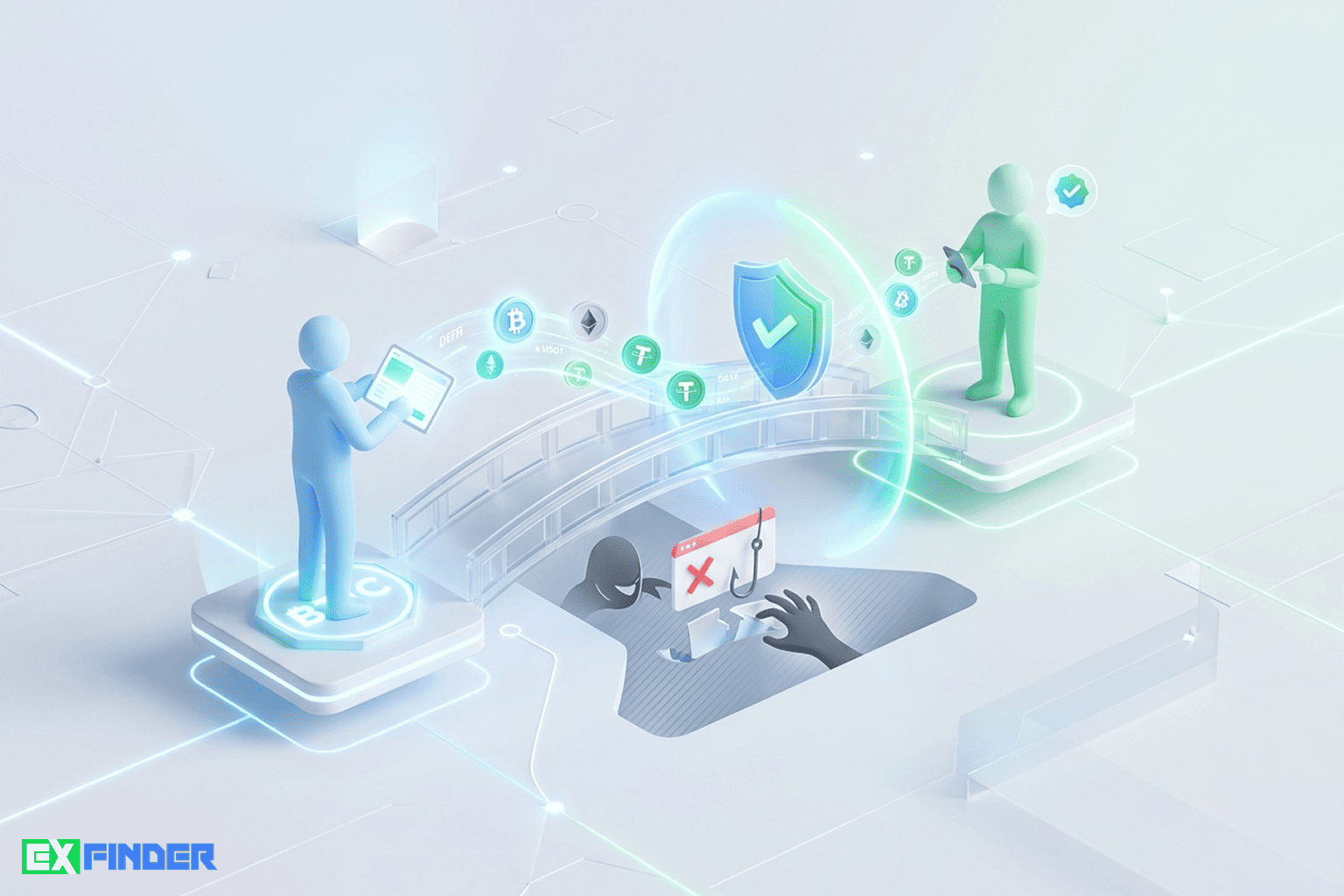
The "Triangle" scheme remains the most widespread and damaging scam in the P2P arena. A fraudster posts a fake listing for a popular product (e.g., an iPhone priced well below market value) on a third-party marketplace and simultaneously opens a P2P order to buy cryptocurrency from you. The scammer gives your personal bank card details to the buyer of the iPhone. The victim sends payment directly to your account. Seeing the funds appear in your mobile banking app, you release the crypto to the scammer. Hours later, the iPhone buyer realizes they were scammed and files a police report against the cardholder—you. The bank freezes your accounts instantly, and law enforcement opens a criminal investigation against you for fraud.
4.2. Chargebacks and Payment Disputes in International Networks
When executing trades using international cards or electronic payment processing apps, scammers frequently abuse chargeback policies. After sending fiat funds and receiving your crypto, the buyer contacts their payment provider or issuing bank, claiming their account or card was stolen. In most cases, payment processors side with the sender, executing a forced reversal that pulls the fiat funds straight out of your account long after the crypto is gone.
4.3. Receiving "Dirty" USDT and Universal Wallet Lockouts
Purchasing cryptocurrency through P2P carries a heavy risk of accepting USDT (TRC-20 or ERC-20) associated with high AML risk ratings. If those tokens were involved in illicit activity, depositing them into any regulated exchange (such as Binance, Kraken, or OKX) will trigger automated blockchain compliance tools (Chainalysis, Elliptic) to lock your account instantly. Unfreezing your assets requires months of legal correspondence and exhaustive documentation proving clean ownership chains.
5. Crypto Exchange Monitoring as a Safe and Reliable P2P Alternative
Given the severe risks inherent in P2P trading, professional traders, institutional investors, and everyday users are moving away from direct private counterparties toward our specialized crypto exchange monitoring platform.
Unlike P2P marketplaces where you interact with unvetted individuals, our monitoring system connects you exclusively with verified, legally registered, professional exchange providers. All listed exchanges process transactions through official merchant payment gateways, completely shielding users from money laundering schemes or third-party transfer fraud.
💡 Why Exchanging via Our Platform Guarantees Full Capital Security:
- Verified Funding Channels: Every exchange in our catalog uses legitimate merchant payment processors. You receive clean fiat without triggering AML bank freezes.
- Stringent Crypto AML Controls: Partner exchanges analyze incoming tokens via automated compliance software, ensuring you receive 100% clean cryptocurrency.
- Zero "Triangle" Risk: Transactions are executed directly with a licensed company or exchange entity, eliminating third-party intervention.
- Guaranteed Rates & Transparent Terms: Our algorithm automatically sorts providers by net profitability, eliminating hidden fees or sudden rate changes mid-trade.
- 24/7 Official Support: In case of technical delays, dedicated support teams from the exchange and our monitoring platform intervene immediately to resolve issues.
6. Security Comparison: P2P Trading vs. Exchange Monitoring (Table 2)
To help you make an informed choice regarding how to convert your funds, review the comparative breakdown of features and risk factors below:
| Evaluation Criterion | P2P Exchange Trading | Our Crypto Exchange Monitoring Platform |
|---|---|---|
| Counterparty Type | Anonymous or unverified private individual | Verified legal business entity with established history |
| Protection Against Bank Account Freezes | Minimal. P2P transfers between individuals raise bank AML red flags. | Maximum. Transfers process via legal corporate merchant gateways. |
| Scam Scheme Vulnerability | Critically High (Triangle scams, chargebacks, forged receipts). | Zero. Fraud vectors from third parties are structurally impossible. |
| Cryptocurrency Cleanliness | Low. High probability of receiving tainted, high-risk assets. | 100% asset cleanliness guaranteed via automated screening. |
| Processing Speed | 15–45 minutes (Dependent on human counterparty speed). | 5–15 minutes (Fully automated or semi-automated execution). |
| Cash Exchange Capabilities | Extremely dangerous with unverified physical meeting points. | Secure transactions inside protected offices across major global cities. |
| Capital Protection Guarantees | Escrow protects crypto on exchange only, not bank accounts. | Multi-level reserve funds and corporate legal liability. |
7. Step-by-Step Guide to Exchanging Crypto Safely via Our Monitoring Platform
To safely and profitably convert digital assets into fiat or alternative cryptocurrencies using our service, follow these steps:
- Select Currency Pair: On our homepage, select the asset you wish to give in the left column (e.g., USDT TRC20, Bitcoin, Ethereum) and the asset you want to receive in the right column (e.g., USD Bank Transfer, EUR Card, Cash).
- Compare Exchange Options: Our dynamic list sorts providers by the most profitable exchange rate. Review minimum trade limits, reserve balances, and real customer reviews.
- Go to Verified Exchange: Click on your selected provider. Our system securely redirects you to the exchange's official verified domain.
- Fill Out Order Details: Enter your conversion amount, destination account details (bank card or wallet address), and contact information (E-mail or Telegram).
- Complete Payment & Receive Funds: Send funds according to the provided instructions. Your order will process automatically within minutes.
8. Practical Cyber Hygiene Rules for Financial Transactions
Even when using top-tier exchange monitoring services, fundamental digital hygiene rules remain essential:
⚠️ Financial Safety Checklist:
- Always Access via Monitoring Links: Navigate to exchange provider websites exclusively using direct links from our aggregator to prevent phishing attacks.
- Double-Check Payment Details: Carefully verify every character of your bank card number or wallet address prior to confirming transactions.
- Avoid Storing Large Balances on Hot Wallets: Keep your long-term capital secured on hardware cold wallets (e.g., Ledger, Trezor).
- Enable Two-Factor Authentication (2FA): Secure your banking apps, email accounts, and monitoring profiles with authenticator apps.
9. Frequently Asked Questions (FAQ)
What should I do if my bank account gets frozen after a P2P transaction?
Visit a bank branch to request formal written documentation detailing the cause of the hold. You can present trade logs from the exchange, though banks frequently decide to terminate client accounts unilaterally when unverified P2P transfers are involved.
How does our platform audit exchange providers before listing them?
We run rigorous due diligence checks: inspecting operational history (minimum 6–12 months active), verifying financial reserves, analyzing user feedback on independent platforms, confirming legal standing, and testing support responsiveness.
Can I exchange cryptocurrency for physical cash in my city?
Yes. Our monitoring aggregator features filters for physical cash operations across major worldwide cities, letting you select verified exchange offices with secure private transaction rooms.
Is identity verification (KYC) mandatory for all exchange operations?
Many providers listed on our platform process small-to-medium conversion limits without requiring mandatory document upload, allowing you to preserve privacy.
Why are exchange monitoring rates often better than P2P rates?
Institutional exchange providers handle massive liquidity volumes and work directly with market makers, allowing them to offer tighter spreads without hidden surcharges common among individual P2P traders.
10. Conclusion: Securing Your Capital in Modern Digital Markets
Peer-to-Peer trading on centralized exchanges is no longer a viable long-term solution for individual investors. High bank card freeze rates under AML laws, sophisticated "Triangle" fraud attacks, chargeback vulnerabilities, and tainted cryptocurrency risks make P2P trades unacceptably hazardous.
Attempting to save tiny fractions on P2P rates frequently leads to total loss of funds or protracted legal and banking investigations. Utilizing our specialized crypto exchange monitoring platform provides a modern, secure, and highly profitable path forward for anyone committed to financial safety.
Don't gamble your hard-earned assets on high-risk P2P markets!
Use our crypto exchange monitoring platform today, select the optimal exchange rate, and execute safe transactions in minutes!