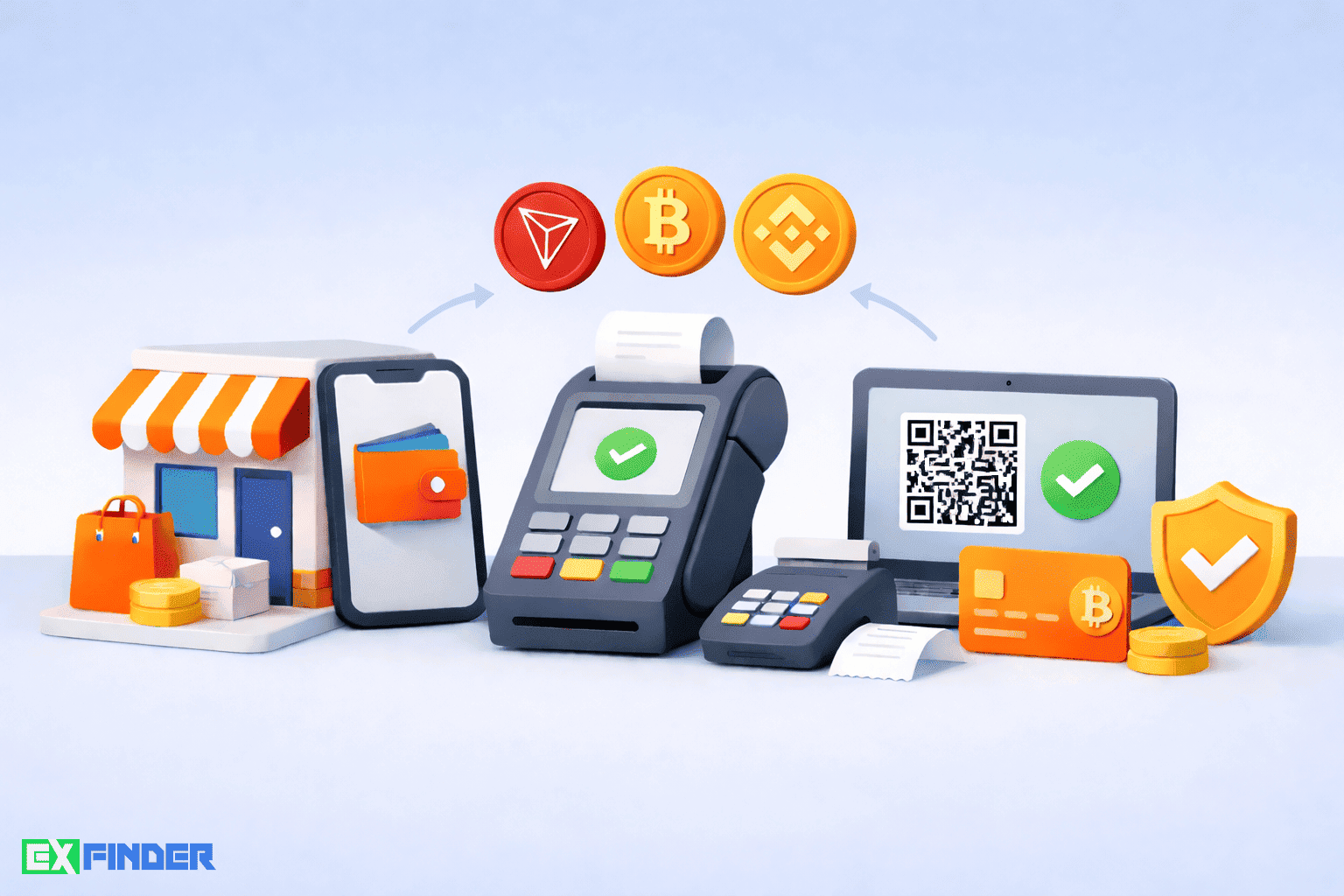
Accepting cryptocurrency payments is no longer a niche experiment reserved for tech startups. Today, small businesses, online stores, SaaS companies, freelancers, and even offline retailers integrate crypto payments to expand their customer base and reduce transaction costs. Digital assets allow companies to receive payments without traditional banking limitations, cross-border delays, or excessive card processing fees. For many entrepreneurs, fiat-to-crypto exchange becomes part of a broader financial strategy that includes stablecoin management and liquidity optimization.
However, implementing crypto payments requires careful planning. Businesses must choose reliable crypto exchangers, evaluate volatility risks, compare top crypto exchangers for conversion, and determine the best crypto exchanger for converting revenue into stable assets or fiat. This guide explains how companies can accept cryptocurrency safely, efficiently, and profitably while minimizing operational and financial risks.
Why Businesses Should Accept Cryptocurrency
Cryptocurrency opens access to a global audience. Customers from different countries can pay instantly without worrying about currency restrictions, international bank fees, or declined card transactions. For e-commerce projects especially, this creates a competitive advantage.
Another key benefit is lower processing costs. Traditional payment providers often charge 2–4% per transaction, while blockchain transfers may offer significantly lower fees depending on the network. With proper selection, companies can achieve low exchange fees and reduce overall payment expenses.
Additionally, accepting Bitcoin and stablecoins strengthens brand perception. When customers search where to buy Bitcoin profitably, they often prefer businesses that already operate within the crypto ecosystem. Accepting crypto positions the company as innovative and future-oriented.
Main Models of Accepting Cryptocurrency
- Direct wallet payments: customers send funds directly to the company’s crypto wallet.
- Payment gateways: third-party providers process transactions automatically.
- Exchange integration: payments are received and instantly converted.
- E-commerce plugins: ready-made modules for Shopify, WooCommerce, and other platforms.
Which Cryptocurrencies to Accept
Bitcoin remains the most recognized digital asset. Many customers actively look for businesses that allow BTC payments, particularly those who frequently compare top crypto exchangers and crypto services.
Stablecoins such as USDT are equally important. USDT exchangers are widely used for fast conversion into stable value, protecting businesses from market volatility.
Comparison of Cryptocurrency Payment Methods
| Method | Fees | Integration Difficulty | Speed | Best For |
|---|---|---|---|---|
| Direct Wallet | Network fees only | Low | Network-dependent | Small businesses |
| Payment Gateway | 1–2% | Medium | Fast | Online stores |
| Exchange + Auto Conversion | Trading fees | Medium | Instant | High-volume companies |
Advantages and Disadvantages
Advantages
- Global reach without banking barriers.
- Lower transaction costs.
- New marketing opportunities.
- Flexible stablecoin management.
Disadvantages
- Market volatility.
- Technical setup requirements.
- Regulatory considerations.
How to Choose a Service for Processing and Conversion
- Check service reputation and transparency.
- Compare top crypto exchangers by fees and liquidity.
- Ensure supported networks match your needs.
- Prioritize platforms offering low exchange fees.
- Remember: the best crypto exchanger balances cost, speed, and security.
Tax and Accounting Considerations
Before launching cryptocurrency payments, businesses must understand local tax regulations. In most jurisdictions, crypto is treated either as property, a digital asset, or an intangible asset rather than legal tender.
This means that when a company receives crypto, it must record the value at the time of transaction. If the asset is later converted through fiat-to-crypto exchange or stablecoin conversion, capital gains or losses may apply.
For companies frequently converting income using reliable crypto exchangers, proper bookkeeping of exchange rates and transaction fees is essential. Working with an accountant familiar with digital assets significantly reduces compliance risks.
Managing Volatility Through Stablecoins
One of the biggest concerns when accepting cryptocurrency is price volatility. A payment received today may fluctuate in value tomorrow.
To mitigate this risk, many businesses use USDT exchangers or automatic conversion tools. Immediately converting incoming payments into stablecoins allows companies to maintain predictable cash flow and budget stability.
Some enterprises choose partial conversion strategies, keeping a portion in Bitcoin while converting the rest into stablecoins. This balanced approach combines long-term exposure with short-term stability.
Security Best Practices
- Use separate wallets for operational and reserve funds.
- Enable two-factor authentication for all exchange accounts.
- Store backup keys in secure offline environments.
- Restrict access permissions among team members.
- Verify transactions using blockchain explorers.
Security should be integrated into internal company policy. Reliable crypto exchangers reduce risk, but internal controls remain equally important.
Common Mistakes Businesses Make
- Ignoring volatility: failure to convert earnings may result in unexpected losses.
- Choosing random services: not all platforms provide transparent terms.
- Lack of internal procedures: crypto assets require structured management.
- Focusing only on exchange rates: low exchange fees and liquidity matter equally.
- Underestimating demand: customers searching where to buy Bitcoin profitably often prefer crypto-friendly merchants.
Step-by-Step Implementation Plan
- Analyze customer demand for crypto payments.
- Select the acceptance model (wallet, gateway, exchange).
- Integrate the chosen solution into your website or POS system.
- Test transactions with small amounts.
- Set up automatic conversion if needed.
- Update accounting and security procedures.
FAQ
Is it legal for businesses to accept cryptocurrency?
In most countries, accepting crypto is legal but regulated. Businesses should review local compliance requirements before launching.
Should companies instantly convert crypto to fiat?
This depends on financial strategy and risk tolerance. Automatic conversion helps reduce volatility exposure.
Which cryptocurrencies are best for businesses?
Bitcoin and stablecoins are the most widely accepted options. They offer strong liquidity and broad ecosystem support.
Is integration technically complex?
For small websites, integration can be completed quickly using plugins. Larger enterprises may require custom API development.
How can businesses reduce transaction costs?
Select networks with lower blockchain fees. Compare top crypto exchangers to ensure competitive conversion conditions.
Are stablecoins recommended for revenue management?
Stablecoins provide predictable value stability. They simplify budgeting and short-term financial planning.
Conclusion
Accepting cryptocurrency enables businesses to expand globally, reduce payment processing costs, and position themselves as innovative market players. By working with reliable crypto exchangers, comparing top crypto exchangers carefully, and selecting the best crypto exchanger for conversion needs, companies can manage revenue efficiently and securely.
Successful implementation requires structured planning, security awareness, and proper accounting. When customers actively search where to buy Bitcoin profitably, offering crypto payment options becomes not only a convenience but also a strategic competitive advantage.