Many beginners enter crypto with one simple idea: if a coin is cheap, it must have huge upside potential. If a token costs $0.01, it feels like it can easily go to $1. If an asset already costs $2,000 or $60,000, people assume it is already too expensive and there is little room left to grow.
This logic is one of the biggest mistakes new investors make. The price of a single coin tells you almost nothing about the real size of the project, its valuation, its growth potential, or its position in the market.
A far more important metric is market capitalization. This number helps you understand how large a crypto asset really is, how much money is already priced into it, how it compares with competitors, and whether future growth is realistic.
In this article, we will explain in simple terms what market capitalization means, how it is calculated, why it matters more than coin price, and how to use it when evaluating crypto investments in 2026.
What Is Market Capitalization?
Market capitalization, often called market cap, is the total market value of all coins or tokens currently in circulation.
In simple words, it is the value the market gives to the entire crypto asset at the current moment.
When people say a cryptocurrency is “big,” they usually mean its market capitalization, not the price of one coin.
For example, :contentReference[oaicite:0]{index=0} has held the top position in crypto for years because of its massive market cap. :contentReference[oaicite:1]{index=1} also remains one of the largest assets because of its overall valuation.
On websites such as :contentReference[oaicite:2]{index=2} and :contentReference[oaicite:3]{index=3}, assets are ranked primarily by market capitalization because it is the easiest way to compare scale.
How Is Market Capitalization Calculated?
The formula is very simple:
Market Capitalization = Current Coin Price × Circulating Supply
Example:
| Asset | Price | Coins in Circulation | Market Cap |
|---|---|---|---|
| Coin A | $1 | 1 billion | $1 billion |
| Coin B | $100 | 1 million | $100 million |
At first glance, Coin B may look stronger because it costs $100. In reality, Coin A is ten times larger by valuation.
This is exactly why experienced investors almost never judge an asset by price alone.
Why Coin Price Can Be Misleading
The price of one coin is only the value of a single unit. It does not tell you how many units exist.
If billions or trillions of tokens exist, the price can stay low even when the project is already worth a huge amount. On the other hand, a coin with limited supply may have a high price while still being relatively small.
That is why statements like these are often wrong:
- “This coin is only $0.01, so it can easily go to $1.”
- “This coin is already $3,000, so it is too late to buy.”
- “Cheap coins always have more upside.”
Let’s look at an example:
A token costs $0.01 and has 1 trillion coins in circulation.
Its market capitalization is:
$0.01 × 1,000,000,000,000 = $10 billion
For that token to reach $1, it would need a $1 trillion valuation. For most projects, that is highly unrealistic.
Low coin price does not automatically mean undervalued.
Why Market Cap Matters More for Investors
Market capitalization gives a more realistic picture of an asset. It measures scale rather than emotion.
For investors, this matters because market cap helps:
- compare assets fairly;
- estimate risk levels;
- measure growth potential;
- avoid overvalued tokens;
- build a smarter portfolio.
An asset worth $500 billion is unlikely to deliver a quick 50x return. That would require an enormous amount of new capital entering the market.
A project worth $300 million may grow faster, but it also carries much more risk.
Crypto Categories by Market Cap
The crypto market is often divided into three broad groups:
| Category | Size | Risk | Potential |
|---|---|---|---|
| Large Cap | $10B+ | Lower | Moderate |
| Mid Cap | $1B–$10B | Medium | Higher |
| Small Cap | Under $1B | High | Very High |
Large cap assets often have stronger liquidity, more exchange listings, and more stable demand. Small cap assets can grow faster but are usually much riskier.
How Experienced Investors Think
Professional market participants rarely ask:
“How much does one coin cost?”
Instead, they ask:
- What is the market cap?
- How large can this sector become?
- How strong is demand?
- Who are the competitors?
- How healthy is tokenomics?
- Are new tokens unlocking soon?
This approach leads to more rational investment decisions.
What Is Fully Diluted Valuation (FDV)?
Another important metric often used together with market capitalization is Fully Diluted Valuation (FDV).
FDV shows what the market capitalization would be if every token in the project were already released into circulation.
Many newer crypto projects launch with only a small portion of supply available. The rest may unlock over months or years.
Example:
- Circulating Supply: 100 million tokens
- Maximum Supply: 1 billion tokens
- Token Price: $1
- Current Market Cap: $100 million
- FDV: $1 billion
At first glance, the project may look small. But if a large number of tokens are still coming, future unlocks may create selling pressure and slow price growth.
That is why in 2026, investors should always check both market cap and FDV.
How Market Cap Helps Estimate Growth Potential
One of the most common mistakes in crypto is believing every coin can easily do a 100x move. In reality, upside potential depends heavily on current valuation.
Example:
- A project worth $50 million could potentially grow to $500 million.
- A project worth $300 billion is unlikely to quickly grow to $30 trillion.
This does not mean large assets cannot grow. It simply means they need much larger capital inflows to achieve the same percentage returns.
That is why small cap tokens attract speculators, while large cap assets often attract long-term investors.
Expert Tip: Ask yourself not only “Can this coin rise?” but also “How much money must enter for this valuation target to happen?”
Market Cap and Risk
Although market cap does not guarantee safety, it often correlates with risk level.
Large assets usually have:
- better liquidity;
- higher trading volume;
- more exchange listings;
- stronger brand recognition;
- lower probability of disappearing completely.
Smaller assets often have:
- thin liquidity;
- high volatility;
- higher delisting risk;
- dependency on hype cycles;
- weaker token economics.
This is why market cap can be useful for estimating risk before buying any asset.
Common Beginner Mistakes
Here are some of the most common mistakes made by people who focus only on coin price:
- Buying “cheap” coins without research.
- Ignoring circulating supply.
- Not checking FDV.
- Expecting 100x returns from already large assets.
- Buying based on hype from social media.
- Confusing coin price with project value.
A token priced at $0.0005 can still be overpriced. A coin priced at $500 can still be undervalued. It depends on valuation, demand, and fundamentals.
How to Analyze a Coin Before Buying
Before investing in any crypto asset, use this simple checklist:
- Check market capitalization.
- Review circulating supply.
- Check FDV.
- Understand the sector.
- Compare with competitors.
- Review liquidity and volume.
- Evaluate product and team activity.
If a token has a low market cap but weak fundamentals, the low valuation alone does not make it a good investment.
Practical Tips for 2026
- Never buy a token only because the price looks cheap.
- Always check market cap first.
- Compare the project with similar competitors.
- Look at token unlock schedules.
- Be realistic about 10x or 100x expectations.
- Build a portfolio across different market cap categories.
- Keep a portion in stronger large cap assets.
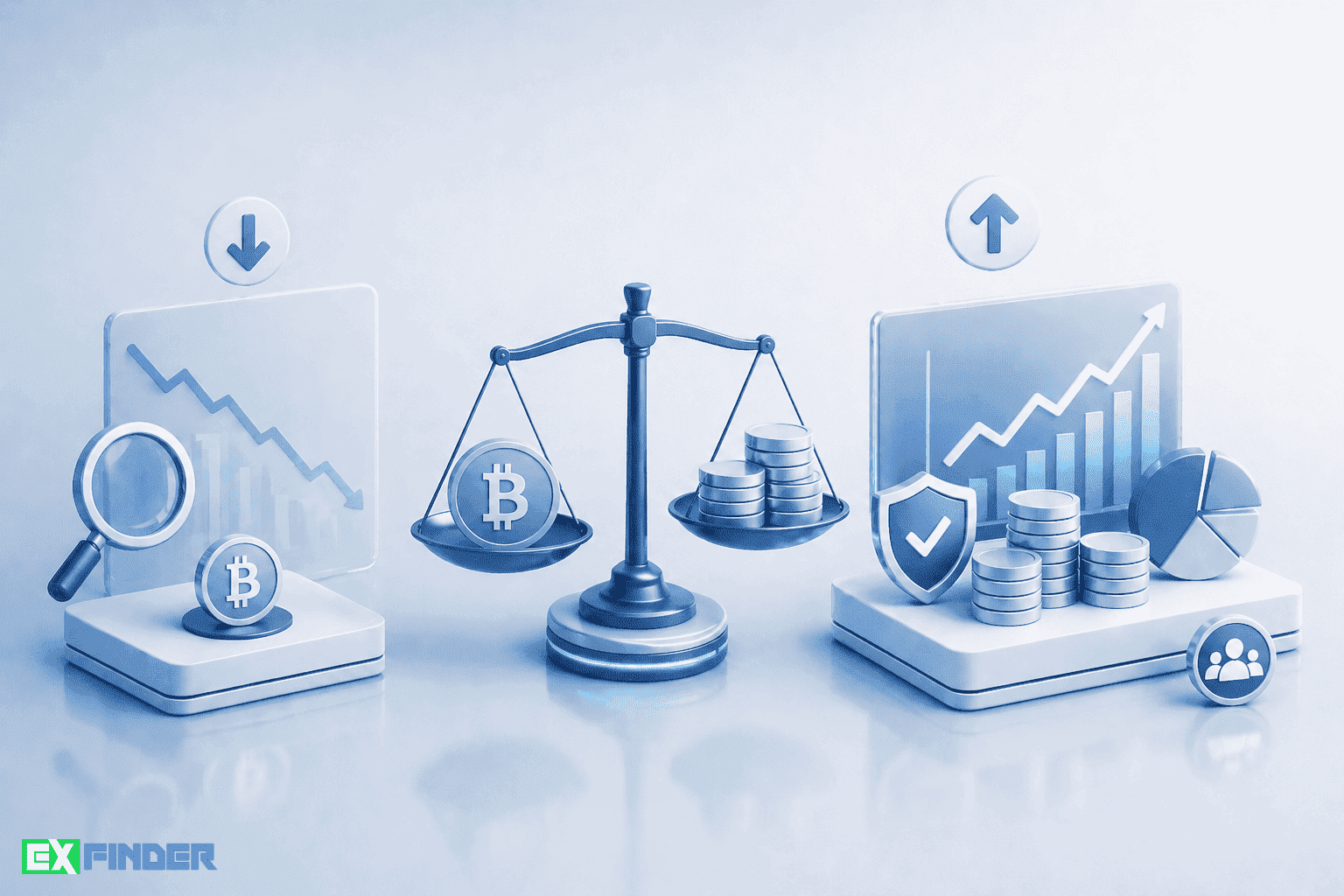
Smart investors do not ask whether a coin is cheap or expensive. They ask whether risk and reward are balanced.
FAQ
What matters more: coin price or market cap?
In most cases, market capitalization matters more because it reflects the real scale of the asset.
Can a $0.01 coin still be expensive?
Yes. If supply is extremely high, even a low price can represent a massive valuation.
What is a good market cap for beginners?
Many beginners start with larger, more liquid assets, but it depends on strategy and risk tolerance.
Does small cap guarantee high returns?
No. It means higher upside potential, but also significantly higher risk.
Why should I check FDV?
FDV helps estimate the impact of future token unlocks and dilution.
Conclusion
Market capitalization is one of the most important metrics in crypto. It helps investors understand the real size of an asset, compare projects fairly, estimate growth potential, and measure risk far better than coin price alone.
The price of one coin is only a number. Without knowing supply and valuation, that number can be misleading.
If you want to make smarter decisions in 2026, stop focusing only on nominal coin price. Analyze market cap, circulating supply, FDV, and real market demand.
That is how experienced investors think — and it is the smarter way to approach crypto markets.