Decentralized exchanges (DEXs) have become a core part of the crypto ecosystem, allowing users to swap assets without intermediaries while keeping full control of their funds. However, for beginners, the path to the first swap rarely starts on a DEX itself. It usually begins with figuring out where to buy Bitcoin at the best rate and how to complete a fiat-to-crypto exchange to prepare funds for decentralized trading.
In practice, most users combine two tools: DEX platforms for crypto-to-crypto swaps and reliable crypto exchangers for fiat on-ramps. That’s why queries like “top crypto exchangers,” “best crypto exchanger,” and “where to buy Bitcoin at the best rate” remain relevant even for experienced DeFi users.
In this guide, you’ll learn how to connect a wallet to a DEX, how to prepare assets via fiat-to-crypto exchange, how to choose reliable crypto exchangers with low exchange fees, and how to combine DEXs with trusted on-ramps for everyday operations. This walkthrough is useful for both beginners and users who want to optimize their workflow.
Important: DEX platforms do not support fiat directly. Before connecting your wallet, you need to acquire crypto using reliable crypto exchangers or the best crypto exchanger available in your region to complete fiat-to-crypto exchange with reasonable fees.
What Is a DEX and Why You Need to Connect a Wallet
A DEX (decentralized exchange) is a protocol or platform that enables peer-to-peer crypto swaps without centralized custody. Unlike centralized exchanges where funds are held on exchange accounts, DEXs interact directly with your wallet. That’s why connecting your wallet is the key step to start using a DEX.
Key benefits of DEX platforms:
- you keep full control of private keys;
- no centralized custody of funds;
- direct access to DeFi liquidity;
- ability to trade tokens not listed on CEXs.
Before connecting a wallet to a DEX, you need crypto for network fees and swaps. This is where top crypto exchangers and reliable crypto exchangers come in, helping you complete fiat-to-crypto exchange and find the best crypto exchanger for your entry point.
Which Wallets Can Be Connected to a DEX
DEX platforms support only Web3-compatible wallets that match the target blockchain (Ethereum, BNB Chain, Polygon, etc.). Common options include:
- browser wallets (browser extensions);
- mobile wallets with built-in Web3 browsers;
- hardware wallets via browser integration.
Regardless of the wallet type, you’ll need to fund it before connecting to a DEX. For many users, this means deciding where to buy Bitcoin at the best rate or how to use USDT exchangers with low exchange fees to complete fiat-to-crypto exchange and then transfer funds to the wallet.
Preparing Funds: Combining Crypto Exchangers with DEXs
Since DEXs do not support fiat, users build a simple funding route: first complete a fiat-to-crypto exchange using reliable crypto exchangers, then connect a wallet to a DEX for further swaps. This is where understanding how to choose a crypto exchanger becomes crucial.
When choosing an on-ramp for fiat-to-crypto exchange, consider:
- whether the platform offers low exchange fees;
- availability of USDT exchangers for DeFi entry;
- platform reputation and user reviews;
- transaction speed;
- supported fiat payment methods.
Table 1. Comparing Funding Routes to Enter a DEX
| Funding Route | Pros | Cons | Best For |
|---|---|---|---|
| Fiat → USDT exchangers → Wallet → DEX | Fast DeFi entry, stable pricing | Extra exchange step and fees | Regular DEX users and swaps |
| Fiat → best crypto exchanger → BTC/ETH → Wallet → DEX | Access to major assets, where to buy Bitcoin at the best rate | Higher price volatility | Investors working with BTC/ETH |
| Fiat → top crypto exchangers → stablecoins → Wallet → DEX | Price stability, beginner-friendly | One more transfer step | Beginners and testing DeFi flows |
How to Connect a Wallet to a DEX: Step-by-Step
Connecting a wallet to a DEX is usually straightforward, but beginners often run into issues due to small mistakes. Before you start, make sure your wallet has enough crypto to cover network fees and your first swap. These funds typically come from a fiat-to-crypto exchange via reliable crypto exchangers or the best crypto exchanger available in your region, ideally with low exchange fees.
Step 1. Choose a DEX Platform
Pick a DEX that supports your target blockchain and tokens. Always verify the official domain and avoid phishing copies. Even if you use top crypto exchangers for fiat on-ramps, the actual DEX connection always happens directly from your wallet.
Step 2. Prepare a Web3 Wallet
Install or open a Web3-compatible wallet and switch to the correct network. If you’ve just completed a fiat-to-crypto exchange using USDT exchangers or found where to buy Bitcoin at the best rate via the best crypto exchanger, confirm that funds have already arrived in your wallet before proceeding.
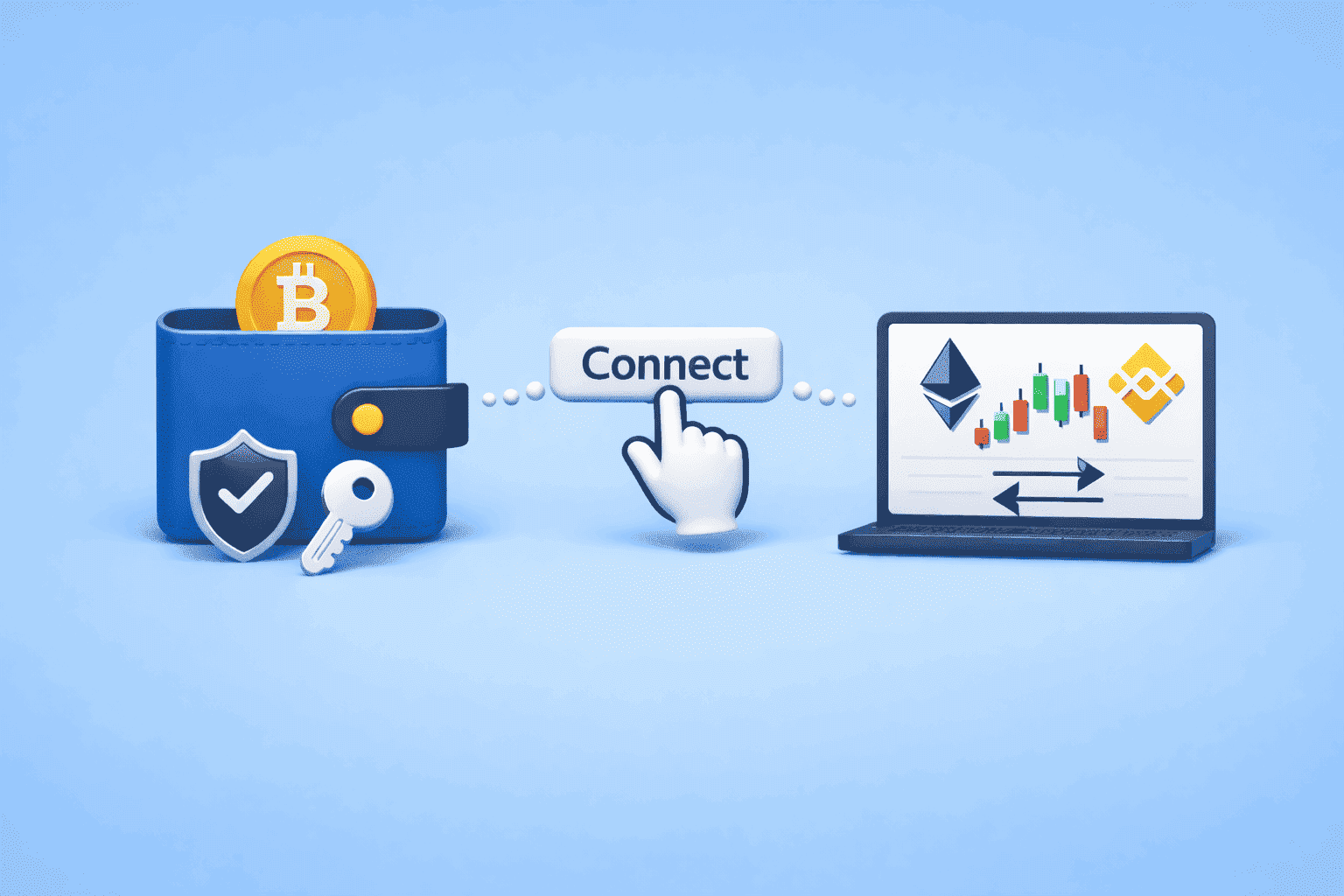
Step 3. Click “Connect Wallet” on the DEX
On the DEX website, click the “Connect Wallet” button and select your wallet type. The DEX does not gain custody of your funds. It only requests permission to view balances and submit transactions for your approval.
Step 4. Confirm the Connection in Your Wallet
Confirm the connection request in your wallet interface. Double-check the website domain and permissions. This habit is especially important if you frequently interact with reliable crypto exchangers and multiple DEX platforms.
Step 5. Make Your First Swap
After connecting, you can perform your first token swap. Review the exchange rate, slippage, and network fee before confirming. For beginners, starting with stablecoins is often easier, as they are typically acquired via USDT exchangers or through top crypto exchangers offering low exchange fees.
Common Mistakes When Connecting a Wallet to a DEX
Even simple actions can lead to costly mistakes. The most common issues include:
- connecting to phishing sites instead of official DEX domains;
- using the wrong blockchain network in your wallet;
- insufficient balance for network fees;
- using unverified crypto exchangers for fiat on-ramps;
- ignoring rates and fees during fiat-to-crypto exchange.
How to Choose a Crypto Exchanger for DEX Funding
Understanding how to choose a crypto exchanger is critical, as most users lose more money at the on-ramp stage than on DEX swaps themselves. Even if you primarily use DEXs, you still need reliable crypto exchangers or the best crypto exchanger to fund your wallet via fiat-to-crypto exchange.
When evaluating platforms, look beyond brand names and focus on real conditions: rates, fees, speed, and user feedback. This approach helps you find where to buy Bitcoin at the best rate or access USDT exchangers with low exchange fees for DeFi entry.
Table 2. Checklist: How to Choose a Crypto Exchanger
| Criterion | What to Check | Why It Matters |
|---|---|---|
| Fees | Whether the platform offers low exchange fees | Directly affects your total entry cost |
| Liquidity | Availability of popular pairs and USDT exchangers | Ensures fast access to needed assets |
| Reputation | User reviews, track record, transparency | Reduces the risk of scams |
| Fiat Methods | Support for convenient fiat-to-crypto exchange options | Simplifies onboarding for beginners |
| Support | Availability and response speed of customer support | Critical if a transaction gets stuck |
Security Best Practices When Connecting a Wallet to a DEX
When using decentralized exchanges, users take full responsibility for their own security. Unlike centralized platforms, DEXs cannot reverse transactions or recover funds. That’s why security starts at the very first step — the fiat-to-crypto exchange. Using reliable crypto exchangers or top crypto exchangers helps reduce risks before you even connect your wallet to a DEX.
Core security practices:
- always verify the official DEX domain before connecting your wallet;
- never connect your wallet to suspicious or unknown websites;
- use a separate wallet for experimenting with new protocols;
- store your seed phrase offline and never share it;
- review and revoke unnecessary smart contract approvals;
- spread funds across multiple addresses when possible.
Practical Use Cases: Combining DEXs with Crypto Exchangers
In real workflows, users combine decentralized exchanges with crypto exchangers to optimize costs and convenience. For example, beginners often start by comparing top crypto exchangers and finding the best crypto exchanger to determine where to buy Bitcoin at the best rate and how to complete a fiat-to-crypto exchange efficiently.
Common scenarios include:
- Regular swaps: users fund wallets via USDT exchangers with low exchange fees, then perform swaps on DEXs without relying on centralized exchanges.
- Long-term investing: investors look for where to buy Bitcoin at the best rate via the best crypto exchanger, transfer assets to a wallet, and use DEXs to diversify portfolios.
- DeFi testing: users choose reliable crypto exchangers for small amounts to test new DEX protocols with limited risk exposure.
FAQ
Can I connect any wallet to a DEX?
No. DEXs support only Web3-compatible wallets that match the target blockchain. Always check whether your wallet supports the network used by the DEX.
Do DEXs support fiat directly?
No. To use a DEX, you need to complete a fiat-to-crypto exchange first via reliable crypto exchangers or top crypto exchangers. Then you transfer funds to your wallet and connect it to the DEX.
Where can I buy Bitcoin at the best rate for DEX usage?
Compare top crypto exchangers and look for the best crypto exchanger based on rates, liquidity, and low exchange fees. This helps minimize costs before connecting your wallet to a DEX.
Are USDT exchangers required?
No, but USDT exchangers are convenient for DeFi onboarding, as stablecoins simplify first steps on DEXs and reduce volatility exposure.
How do I choose a crypto exchanger for my first on-ramp?
If you’re wondering how to choose a crypto exchanger, compare fees, reputation, supported fiat methods, and support quality. This helps you find reliable crypto exchangers for fiat-to-crypto exchange.
Conclusion
Connecting a wallet to a DEX is a natural step for anyone exploring decentralized finance. However, a smooth start depends not only on choosing the right DEX, but also on how you prepare funds at the entry stage. That’s why topics like “top crypto exchangers,” “best crypto exchanger,” “where to buy Bitcoin at the best rate,” and “fiat-to-crypto exchange” remain relevant even for active DEX users.
By using reliable crypto exchangers with transparent conditions, choosing USDT exchangers with low exchange fees, and following basic security practices, you can significantly reduce costs and risks when getting started with DEX platforms. The key is to approach onboarding thoughtfully and regularly review how to choose a crypto exchanger based on current market conditions.